
The Core Legal Standard: Why Autonomous AI Content Lacks Copyright Protection
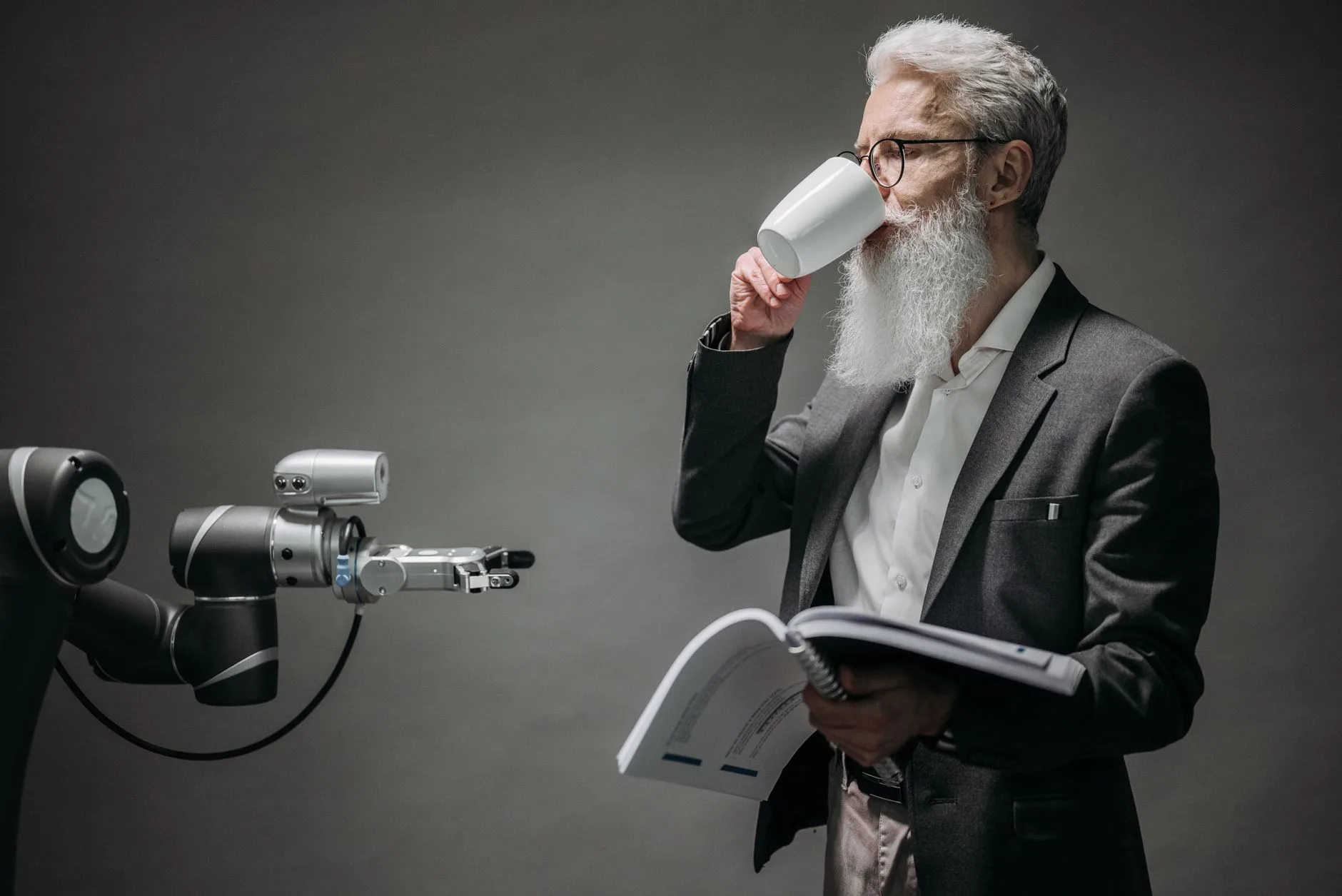
As generative artificial intelligence transforms the publishing landscape, content creators and enterprises frequently grapple with the ownership status of machine-generated output. In the United States and across multiple international jurisdictions, the core legal standard remains firmly rooted in a centuries-old principle: copyright law protects human creativity, not text generated autonomously by artificial intelligence models. This foundational baseline dictates that when a language model drafts a book, article, or marketing whitepaper entirely on its own, the resulting text enters the public domain immediately upon generation, regardless of the commercial value of the underlying material or the sophistication of the prompt engineering used to trigger the response.
This stance has been repeatedly affirmed by regulatory bodies and federal courts. Most notably, the U.S. Copyright Office reaffirmed this strict position in its January 2025 report, Copyright and Artificial Intelligence, Part 2: Copyrightability, serving as a definitive regulatory clarification rather than a novel shift in policy. The agency emphasized that statutory text and constitutional precedent require a human mind behind the expressive elements of a work. This document built upon earlier judicial milestones, such as the landmark litigation surrounding Stephen Thaler’s autonomous machine creation. The legal journey culminated when the U.S. Supreme Court’s 2023 decision not to review Thaler v. Perlmutter left in place the definitive lower-court ruling that a work claimed to have been generated entirely by a machine, without human authorship, cannot be copyrighted under U.S. law. For publishers trying to navigate AI Content vs. Humans: Finding the 2026 Balance, these legal boundaries carry immense financial and operational implications.
The legal vacuum surrounding purely synthetic text creates distinct commercial vulnerabilities for publishing houses and digital media companies. Because autonomous AI output lacks copyright protection, any competitor can legally scrape, republish, and monetize articles or books generated wholly by machine learning models without facing infringement liability. This risk profile has been extensively analyzed by legal scholars, with many publications examining The AI Copyright Vacuum to advise corporate entities on risk mitigation. Publishers who fail to distinguish between fully automated text generation and human-guided workflows risk building assets that offer no proprietary legal defenses, rendering their intellectual property portfolios vulnerable to wholesale duplication by competitors.
To understand how this standard is applied in practice, it is helpful to examine the specific thresholds established by the U.S. Copyright Office:
- Autonomous Generation: Text produced by an LLM following a single prompt, without subsequent substantial human editing, restructuring, or creative arrangement, is deemed ineligible for copyright registration.
- Human-Assisted Selection and Arrangement: As clarified in the 2025 report, Copyright and Artificial Intelligence, Part 2: Copyrightability, humans can secure copyright over the overall compilation, selection, and arrangement of AI-generated components if they demonstrate sufficient creative control over the final product.
- Traditional Authorship Integration: The modicum of creativity required by constitutional standards must emanate from a human creator. The machine is legally classified as a tool—analogous to a camera, paintbrush, or word processor—rather than a legal author or co-creator.
International frameworks mirror this strict human-authorship requirement, though nuances vary regarding works generated with varying degrees of machine assistance. Scholars specializing in comparative intellectual property law note that European jurisdictions similarly demand a manifestation of the author’s own intellectual creation, a standard that autonomous machine learning outputs fail to meet. Detailed academic analyses, such as those published in comparative law journals like the Oxford University Press study on the Reflexion on the Copyrightability of AI-Assisted Works in the US, EU, highlight that courts on both sides of the Atlantic are increasingly drawing a hard line between software operating as a mere instrument of human expression versus software acting as an autonomous creator.
Ultimately, publishers must recognize that simply owning the server infrastructure, paying the API subscription fees, or writing complex system prompts does not confer copyright ownership over the resulting prose. Navigating the modern publishing ecosystem requires rigorous internal workflows that document human contribution, creative revision, and editorial oversight. Without these verifiable human touchpoints, organizations risk investing heavily in digital assets that enjoy zero statutory protection against unauthorized exploitation.
Human Contribution vs. Prompts: Where the Legal Line Is Drawn
The rapid integration of sophisticated language models into modern publishing workflows has ignited an intense global debate regarding intellectual property. Publishers and independent creators are eager to understand where the legal boundaries lie, especially as algorithms become capable of generating entire chapters, blog posts, and marketing copy within seconds. When examining this landscape, the fundamental question for any publishing house is not whether artificial intelligence was utilized in the creation process, but rather where the precise threshold of human contribution is met. According to the U.S. Copyright Office’s 2025 Copyright and Artificial Intelligence, Part 2: Copyrightability report, copyright eligibility strictly hinges on identifiable, original human authorship rather than the mere presence of automated generation tools. Understanding this distinction is critical for editorial teams seeking to protect their commercial assets in a competitive market.
A widespread misconception among content creators is that writing highly complex, multi-layered prompts elevates the user to the status of a legal author. However, the U.S. Copyright Office’s 2025 Copyright and Artificial Intelligence, Part 2: Copyrightability explicitly clarifies that prompts alone—even when meticulously detailed, highly descriptive, or repeatedly revised through trial and error—do not confer copyright authorship upon the prompter. The underlying reasoning is straightforward: when an individual inputs a prompt, the artificial intelligence model itself acts as the autonomous creator of the expressive details, sentence structures, and lexical choices. The prompter merely sets the parameters or gives instructions, much like a client commissioning an artist or a director giving general directions to an actor. Because the machine determines the actual expressive form of the text, the resulting output remains in a legal gray area, frequently categorized as unprotected public domain material unless substantial human intervention occurs afterward.
To cross the threshold into copyrightable territory, publishers must look closely at how human intervention transforms raw algorithmic output. Creative human editing, structural modification, and the deliberate selection and arrangement of AI-generated passages can fundamentally alter the legal equation. For instance, if an editor takes an AI-generated draft, completely rewrites entire paragraphs, injects original commentary, and structures the narrative framework in a novel way, those specific human-authored contributions can be registered for copyright protection. This principle closely aligns with traditional standards for derivative works and compilations, where the new, original expressive elements added by the human creator are protected, even if the underlying source material is unprotectable. To fully grasp how these advanced text generators function behind the scenes before an editor ever touches the text, publishers can explore insights on how LLMs power modern AI content creation.
Conversely, merely proofreading, correcting minor typos, or performing superficial cosmetic changes to an AI-generated text will not establish the requisite level of original authorship. The U.S. Copyright Office’s 2025 Copyright and Artificial Intelligence, Part 2: Copyrightability emphasizes a rigorous, case-by-case assessment for every submitted manuscript or article. If an editorial team’s involvement is limited to clicking a generation button, fixing a few grammar mistakes, and formatting headings, the resulting work will likely be denied copyright registration because the creative heavy lifting was performed by the machine. Publishers must therefore maintain meticulous audit trails of their editorial workflows, documenting precisely which passages were written, expanded, or radically transformed by human staff versus those generated entirely by software.
To better navigate these complex legal requirements, publishing professionals often evaluate their workflows against specific benchmarks of human input. The following comparison illustrates the legal divergence between unprotectable automated output and protectable hybrid works:
| Workflow Type | Primary Driver of Expression | Legal Status / Copyrightability |
|---|---|---|
| Pure Prompting | Algorithmic generation based on user instructions | Not copyrightable; output lacks sufficient human expressive control. |
| Cosmetic Editing | Automated generation with minor proofreading and formatting | Not copyrightable; editorial changes are too trivial to constitute original authorship. |
| Substantive Hybrid | Extensive human rewriting, original additions, and structural arrangement | Protectable only regarding the identifiable human-authored passages and editorial modifications. |
Ultimately, publishers must adopt a strategic approach to compliance and asset protection. Relying blindly on automated text generation without substantial, verifiable human modification leaves books and articles vulnerable to free-riding competitors who can legally copy the unprotectable elements. By ensuring that human editors actively shape, rewrite, and curate AI-assisted drafts—and by keeping clear documentation of these creative modifications—publishers can successfully secure intellectual property rights while leveraging modern technological efficiencies.
Mandatory Disclosures and Registration Rules for Mixed Works
Navigating the legal landscape of hybrid publications requires absolute precision, particularly when dealing with mixed works that combine human authorship with artificial intelligence generation. As the publishing industry rapidly evolves alongside advanced text-generation technologies—mirroring trends explored in resources like the Automate Content Creation Without Losing Brand Voice: 2026 Guide—creators face strict procedural hurdles. When publishers seek formal legal protection for books, anthologies, and multi-author articles containing machine-assisted text, they must adhere to rigorous federal filing standards designed to separate protectable human expression from unprotectable algorithmic output.
Under the U.S. Copyright Office’s landmark 2023 Copyright Registration Guidance: Works Containing Material Generated by Artificial Intelligence, applicants carry an affirmative duty of candor and disclosure. If a submitted work incorporates more-than-de-minimis AI-generated material, the applicant is legally obligated to explicitly disclose this fact directly within the copyright registration application. Failing to notify the office about machine-produced elements can invalidate the registration entirely, rendering any subsequent infringement lawsuits vulnerable to dismissal or severe legal penalties for misrepresentation.
To satisfy these federal disclosure mandates, publishers must meticulously audit their manuscripts before submitting Form TX or online equivalents to the U.S. Copyright Office. The application workflow requires applicants to explicitly identify the human-authored contributions they claim while actively excluding the rest. Authorship must be parsed down to the sentence or paragraph level if necessary, ensuring that the register clearly reflects only the original creative choices made by a human being. Detailed explanations must be provided in the application’s “Limitation of Claim” or “Note to Copyright Office” sections, outlining precisely which chapters, sections, or lines of code were generated by proprietary models or third-party platforms.
Furthermore, when registering a mixed human-and-AI work in the United States, applicants should deliberately exclude or disclaim AI-regulated portions from the copyright claim. The U.S. Copyright Office’s 2023 Copyright Registration Guidance: Works Containing Material Generated by Artificial Intelligence explicitly distinguishes those algorithmic portions from protectable human expression. This disclaimer process does not mean the entire book or article is rejected; rather, it creates a bifurcated registration. The human-crafted narrative, structural framing, selective editing, and thematic compilation remain fully protected under intellectual property law, while the raw machine-generated paragraphs fall into the public domain. Legal practitioners often analyze these nuances through frameworks similar to those discussed in legal reviews such as The AI Copyright Vacuum, highlighting how traditional copyright doctrines struggle with automated outputs.
To operationalize these registration rules effectively, publishing houses and independent creators should implement a strict internal documentation protocol during the drafting phase. Maintaining comprehensive version histories, prompt engineering logs, and detailed editorial revision trails provides the evidentiary backbone required if the U.S. Copyright Office issues a questionnaire or office action regarding the AI content. Publishers should structure their metadata and manuscript files to easily segregate human edits from generative blocks. By maintaining transparency, properly completing the application’s limitation fields, and disclaiming unprotectable machine output, creators can successfully secure enforceable registrations for their hybrid literary works without risking statutory fraud or registration cancellation.
AI as an Assistive Tool: Protecting Valid Workflows

For modern publishing teams navigating the shifting regulatory landscape, generative artificial intelligence does not have to represent an all-or-nothing copyright hazard. The legal consensus increasingly hinges on a clear dichotomy: treating generative technology as an autonomous creator versus wielding it as a sophisticated, subordinate assistant. As clarified in the U.S. Copyright Office’s 2025 Copyright and Artificial Intelligence, Part 2: Copyrightability report, human-authored expression remains fully eligible for copyright protection even when a person utilizes AI during the creative process, provided the human input dictates the final expressive elements of the work. This nuanced stance provides a vital roadmap for editors, journalists, and content creators aiming to scale operations without forfeiting their intellectual property rights. Understanding how to legally partition your workflows is essential, especially as publishers look to balance efficiency with legal safety, a topic further explored in our analysis on whether AI content can make money in 2026.
To secure copyright protection over books and articles that incorporate AI-generated elements, publishing teams must implement rigorous editorial workflows that establish substantial human authorship. When a generative tool is deployed merely to brainstorm structural angles, summarize raw data, or draft rudimentary bullet points that are subsequently rewritten, expanded, and synthesized by a human writer, the resulting text is considered AI-assisted rather than AI-generated. The distinction lies in the locus of creative control. If the final expression—the specific phrasing, narrative voice, structural flow, and stylistic nuances—originates from human cognition and editorial intervention, the work meets the standard of human authorship required for registration. Conversely, copying and pasting raw, unedited outputs straight from a large language model strips the publication of protectable human expression, leaving it in the public domain where competitors can freely duplicate it.
To help publishing teams audit their internal pipelines and ensure they remain on the safe side of intellectual property law, consider the following structural breakdown of valid versus invalid deployment practices:
| Workflow Stage | Valid Assistive Usage (Protectable) | Invalid Autonomous Usage (Unprotectable) |
|---|---|---|
| Research & Discovery | Querying models for historical timelines, data point aggregation, or background context to verify against primary sources. | Relying on the model to fabricate case studies, statistics, or unsupported narrative claims without fact-checking. |
| Outlining & Structuring | Generating multiple chapter proposals or article headers and manually selecting, merging, and rewriting the hierarchy. | Accepting the model’s entire generated table of contents verbatim as the structural spine of a book without human revision. |
| Drafting & Writing | Using AI to suggest alternative phrasing for complex sentences, overcome writer’s block, or draft secondary background paragraphs that are heavily rewritten. | Prompting the model with a single sentence and publishing the resulting multi-paragraph output word-for-word without editorial touch. |
| Editing & Polishing | Utilizing grammar correction tools and style checkers to refine syntax, improve readability, and catch typographical errors. | Running bulk content generation scripts that mass-produce entire articles for automated publishing platforms. |
Integrating these assistive tools successfully also requires a clear understanding of broader industry applications. Many digital marketing departments now lean heavily on automated content marketing systems to scale organic growth, yet legal practitioners consistently warn that automation must never bypass human creative oversight. If an editorial team’s workflow mimics a fully automated factory line where human involvement is reduced to mere prompt engineering, the U.S. Copyright Office will likely view the output as machine-generated. According to historical registration denials by the U.S. Copyright Office, simple instructions or prompts given to an algorithm do not constitute authorship, because the machine—not the human—determines the expressive elements of the output.
Therefore, establishing an evidentiary trail of human creation is becoming a best practice for modern publishers. Editorial teams should retain early manuscript drafts, prompt engineering iterations that show directional guidance rather than direct text generation, revision histories, and notes that document the human editorial process. While the U.S. Copyright Office released Copyright and Artificial Intelligence, Part 3: Generative AI Training in May 2025 to address the separate legal complexities surrounding how foundational models are trained on copyrighted works, the guidelines on copyrightability remain firmly anchored in the degree of human contribution present in the final published asset. By carefully documenting how tools are used for research, outlining, and structural drafting—while ensuring all prose is substantially authored, shaped, and finalized by human hands—publishers can confidently protect their intellectual property and maintain secure, legally sound workflows in an increasingly automated media ecosystem.
International Landscapes: United Kingdom and Global Policy Updates in 2026
Navigating the intersection of intellectual property and generative artificial intelligence requires publishers to discard any lingering assumptions of global legal uniformity. While domestic regulatory bodies like the United States Copyright Office have maintained a strict, unwavering stance that copyright protection demands a foundation of human authorship, cross-border publishers operate in a fragmented ecosystem where international frameworks diverge sharply. Assuming that a book or an article cleared for protection in one market automatically enjoys identical legal safety across global territories is a critical mistake that can invalidate enforcement rights, jeopardize licensing agreements, and expose international distribution channels to severe liability risks.
The regulatory environment within the United Kingdom vividly demonstrates how starkly national policies can contrast with American standards, while remaining fluid and subject to ongoing structural revision. In the United Kingdom, the legislative and executive branches have actively grappled with how to classify and regulate non-human creations. The government’s comprehensive 2024–2025 consultation specifically evaluated sweeping potential modifications regarding computer-generated works, alongside mandatory transparency and labelling frameworks for AI-generated text and media outputs. Following these extensive stakeholder engagements, the official GOV.UK 2025 Copyright and artificial intelligence statement of progress carefully records the evolution of these discussions. Publishers must exercise extreme caution here, ensuring they never mistake policy consultation proposals or interim government reports for settled new statutory rules.
Historically, the United Kingdom occupied a unique position under Section 9(3) of the Copyright, Designs and Patents Act 1988, which historically afforded a form of copyright to “computer-generated” works where no human author could be identified, typically vesting authorship in the person who made the arrangements necessary for the creation of the work. However, as generative tools evolved exponentially through 2025 and into 2026, policymakers faced mounting pressure from traditional publishing unions, creator syndicates, and technology lobbies to reform or outright repeal these legacy provisions. The ongoing UK policy review illustrates that the fundamental treatment of machine-written books and journalistic outputs can differ wildly by jurisdiction, creating a treacherous compliance landscape for international media enterprises seeking to syndicate content simultaneously across London, New York, and European capitals.
To better understand the operational risks of cross-border publishing, consider how different regions evaluate the threshold of human input required for copyright eligibility. The divergence is not merely semantic; it dictates whether an enterprise can legally protect its commercial assets against unauthorized scraping, reproduction, and piracy.
| Jurisdiction | Primary Governance Body | Current Stance on AI Authorship (2026) | Legislative/Policy Status |
|---|---|---|---|
| United States | US Copyright Office (USCO) | Strictly rejects copyright for purely AI-generated text; requires demonstrable human authorship. | Settled administrative practice, reinforced by continuous case law and judicial rulings. |
| United Kingdom | Intellectual Property Office (IPO) / Parliament | Re-evaluating legacy computer-generated work protections; balancing tech innovation with creator rights. | Ongoing policy updates, documented in the 2025 GOV.UK progress reports. |
| European Union | European Parliament / EUIPO | Emphasizes transparency, stringent training data rules under the EU AI Act, and narrow human-centric copyright definitions. | Active implementation phase across member states following recent legislative enactments. |
Simultaneously, the European Union has approached the challenge through a dual lens of copyright harmonization and rigorous AI governance. Under the framework of the European Union Artificial Intelligence Act and regional intellectual property directives, publishers operating within the bloc face stringent transparency mandates regarding the datasets used to train models, as well as strict limitations on copyright exceptions for text and data mining. European courts have consistently leaned toward an interpretation where intellectual creations must reflect the “author’s own intellectual creation”—a standard that inherently excludes autonomous algorithmic outputs devoid of meaningful human creative direction, editing, or structural curation.
For content creators, publishing houses, and digital content managers, these global discrepancies mean that publishing strategies must be localized rather than generalized. A digital enterprise that relies heavily on automated workflows to scale its output—much like strategies explored in broader digital marketing evolution discussions, such as those analyzing the viability of automated strategies in Are Blogs Still Worth It in 2026? SEO Outlook—must perform thorough risk assessments before launching titles internationally. If a publisher treats international copyright law as a monolith, they risk discovering too late that an AI-assisted manuscript fully protected or tolerated in one territory is considered part of the public domain in another, leaving them defenseless against commercial exploitation by competitors.
Platform Rules vs. Legal Copyright: Managing Distribution Requirements
Navigating the intersection of artificial intelligence and publishing requires a clear understanding of a fundamental distinction: the difference between statutory copyright ownership under federal and international law, and the contractual terms of service enforced by digital storefronts and publishing platforms. Many content creators and independent publishers mistakenly assume that if a manuscript meets the legal thresholds for protection—or conversely, if it falls into a legal gray area—digital distribution channels will automatically mirror those same legal standards. In reality, modern digital storefronts operate independently of statutory copyright offices, establishing their own strict rules regarding disclosure, metadata tagging, and content categorization. Understanding how these separate systems interact is vital for avoiding sudden account suspensions, revenue withholdings, or permanent bans from major sales channels.
Copyrightability and platform disclosure are entirely separate questions: an AI-assisted book may include protectable human-written material while a publishing platform can still require its own AI-content disclosure; publishers should check the current platform rules as well as the law. For instance, the United States Copyright Office and similar international bodies evaluate works based on the quantum of human creativity, assessing whether a human author exercised ultimate creative control over the final expression. However, an e-book distributor or online marketplace does not necessarily perform a granular, page-by-page legal audit to determine your work’s eligibility for statutory registration. Instead, they rely on sweeping platform-wide policies designed to manage consumer expectations, protect brand reputation, and comply with rapidly evolving industry standards. A book might legally contain enough human-authored structural editing, commentary, and compilation to pass muster under legal examination, yet still violate a platform’s specific digital distribution mandate if it fails to declare the use of automated text-generation tools during the upload process.
Major digital storefronts have each crafted distinct compliance frameworks that dictate how publishers must handle AI-generated or AI-assisted content. These platforms generally categorize submissions into different tiers, ranging from fully human-authored works to entirely automated, zero-touch machine publications. When a publisher submits a manuscript, they are typically required to check specific boxes or complete metadata declarations concerning the involvement of artificial intelligence. Failing to accurately disclose this information can trigger severe contractual penalties. This dynamic is explored in greater depth within legal commentaries such as The AI Copyright Vacuum, which highlights how private platform governance often moves faster and with more immediate financial impact than statutory legal reforms. Because storefront agreements are bound by contract law rather than copyright law, these companies possess broad latitude to restrict, demote, or remove titles that fail to follow their internal notification protocols, regardless of whether the underlying text could theoretically be defended in a copyright infringement suit.
To maintain compliant and uninterrupted distribution, publishers must implement a multi-layered verification workflow before pushing any title live. This process involves evaluating the content against both external legal precedents and the specific, shifting guidelines of every target sales channel. Below is a practical breakdown of how statutory requirements diverge from platform mandates in day-to-day publishing operations:
| Feature / Dimension | Statutory Copyright Law | Platform Terms of Service |
|---|---|---|
| Primary Governing Body | National Copyright Offices (e.g., USCO) | Private Retailers and E-book Distributors |
| Core Objective | Rewarding human authorship and innovation | Consumer trust, platform safety, and risk mitigation |
| Core Enforcement Mechanism | Registration refusal or copyright invalidation in court | Account termination, royalty forfeiture, or title removal |
| Disclosure Requirement | Mandatory disclosure of AI material during registration | Pre-publication checkboxes and metadata tagging |
Furthermore, publishers who utilize artificial intelligence for ancillary tasks—such as automated proofreading, structural outlines, or marketing copy generation—must carefully review platform definitions. Some storefronts distinguish between “AI-generated” content (where the machine writes the bulk of the text) and “AI-assisted” content (where humans write the text with software support). Misclassifying your workflow due to ambiguous platform definitions can lead to automated enforcement flags. While optimizing your digital publishing workflow, it is also wise to understand broader algorithmic trends across search and discovery engines, such as those discussed in strategies regarding automated optimization like Can ChatGPT Do SEO? The Complete 2026 Guide, which underscores the necessity of transparent, guideline-abiding digital practices. Ultimately, treating platform compliance as a distinct operational requirement—parallel to, but separate from, statutory copyright registration—ensures that your publishing business remains resilient against sudden changes in both digital storefront policies and intellectual property law.
Best Practices: Compliance Workflows and Avoiding Common Legal Mistakes

Navigating the intersection of artificial intelligence and intellectual property requires a rigorous, methodical approach to publishing operations. As digital creators scale their output using automated tools, the risk of legal non-compliance, rejected copyright applications, and expensive ownership disputes increases dramatically. To safeguard your hybrid content portfolios, you must implement institutional compliance workflows that document every stage of creation, from initial ideation to final editing. Establishing a transparent paper trail is no longer optional; it is a critical defensive strategy for any modern publishing business.
The primary foundation of any legally sound AI content workflow is the meticulous preservation of your production history. For every book, whitepaper, or article published, your team must keep raw drafts, version-controlled edit histories, prompt logs, and creative notes. These documents should clearly identify which passages were generated by machine learning models, which were subsequently rewritten, and which were originally conceived and drafted by human writers. According to legal experts analyzing global IP frameworks, including academic insights published in Reflexion on the Copyrightability of AI-Assisted Works in the US, EU, this granular evidence is indispensable. If your copyright registration or commercial ownership is ever challenged in court or by a national intellectual property office, your edit histories will serve as the definitive proof explaining and defending your claimed human authorship.
One of the most frequent and costly mistakes publishers make is claiming total human authorship for a work that incorporates substantial passages generated by artificial intelligence. In the United States, official regulatory guidelines have established strict disclosure mandates. According to the United States Copyright Office’s 2023 registration guidance, applicants are legally required to explicitly disclose any more-than-de-minimis AI-generated material contained within a submission and formally exclude that material from the copyright claim. Attempting to hide machine involvement or blanket-certifying an AI-assisted manuscript as entirely human-created can invalidate your registration, expose your business to allegations of fraud on the copyright office, and undermine your ability to enforce your rights against infringers in the event of unauthorized copying.
To prevent these critical errors, publishers should adopt a standardized, step-by-step compliance protocol for every hybrid asset moving through their pipeline:
- Prompt Archiving: Save all prompt engineering sequences, iterative variations, and model parameters in a secure, centralized repository alongside the project files.
- Version Separation: Maintain distinct file versions showing the raw machine output immediately after generation, followed by tracked changes that highlight human editorial interventions, structural reorganizations, and creative expansions.
- Attribution Mapping: Utilize internal metadata tagging or documentation sheets to map specific chapters or article sections to their respective creators—whether a specific human author, a designated LLM model, or a collaborative hybrid effort.
- Mandatory Disclosure Audits: Before submitting any work for formal copyright registration, conduct an internal legal audit to verify that all AI-generated portions exceeding a de-minimis threshold are appropriately identified and excluded from the ownership claim.
Integrating these practices into your daily editorial routine ensures that your publishing workflow remains resilient against shifting regulatory standards. Furthermore, maintaining clear documentation naturally aligns with broader digital optimization strategies, such as maintaining high-end editorial standards for Blogging for SEO in 2026: Does It Still Work? where content uniqueness and demonstrable expertise remain paramount. When search engines and legal regulators alike demand proof of authenticity, a robust edit history provides the definitive answer.
Finally, publishers must remain vigilant about how they integrate automated tools across adjacent operational channels. Whether you are scaling long-form literary works or Automating Social Media with ChatGPT and Workflows in 2026, the principle of verifiable human oversight must remain consistent. By treating AI as an advanced assistant rather than a sole creator—and by backing up that relationship with airtight documentation—publishing operations can successfully protect their commercial assets, respect statutory limitations, and build sustainable, legally compliant portfolios for the long term.