
Understanding the Foundation: What Is Content Planning?

Content planning is the tactical layer that sits precisely between a high-level content strategy and the actual act of publishing. While executives and directors often ponder abstract market positioning, content planning deals in concrete deliverables, mapping out the precise mechanisms required to bring corporate narratives to life. At its core, an effective content planning workflow decides what specific assets to create, defines the exact audience segments they target, establishes a realistic timeline for when pieces go live, and dictates the key performance indicators (KPIs) through which success will be measured. Without this tactical bridge, even the most brilliant overarching corporate vision will stall in ideation spreadsheets and never reach the target audience searching for solutions.
To fully grasp the mechanics of content planning, one must understand how it fundamentally differs from a high-level content strategy. A content strategy answers the bigger, foundational questions: why does the content exist in the first place, who does it serve within the broader total addressable market, and which specific revenue or brand awareness business goals does it support? For instance, when an enterprise B2B software-as-a-service (SaaS) provider defines its overarching framework, it might establish a proven SEO content strategy for long-term traffic to capture mid-funnel decision-makers. Conversely, content planning takes that exact framework and translates it into a workable, day-to-day publishing schedule. It moves the enterprise from abstract concepts like “we need to capture organic search traffic in the fintech vertical” to concrete actions like “assigning a 2,500-word comparison guide on payment gateways to a specialized freelance writer by Tuesday, with an editor review scheduled for Friday and a live publication date of the following Wednesday.”
A very common and damaging mistake in modern marketing organizations is treating strategy and planning as the exact same thing. Conflating these two distinct disciplines blurs long-term positioning with short-term execution, leading to chaotic editorial calendars and misaligned messaging. When a B2B brand skips the strategic foundation and jumps straight into chaotic tactical planning, its output becomes reactive, chasing fleeting industry trends rather than serving long-term business objectives. Conversely, when a team builds a brilliant strategy but fails to establish a rigorous planning workflow, the strategy remains a theoretical PDF sitting unused on a shared drive. Recognizing the boundary between the two ensures that every piece of content published serves a measurable purpose while maintaining consistency in output.
To operationalize this distinction, marketing teams can utilize a structured breakdown of responsibilities. This separation of concerns prevents creative burnout and keeps the editorial engine running efficiently across quarters:
| Dimension | Content Strategy (The “Why” and “Who”) | Content Planning (The “What”, “When”, and “How”) |
|---|---|---|
| Primary Focus | Market positioning, audience personas, core messaging pillars, and ROI frameworks. | Editorial calendars, workflow assignments, publishing dates, and distribution checklists. |
| Time Horizon | Long-term (1 to 3 years), adapting only to major shifts in market dynamics or company pivots. | Short to medium-term (weekly, monthly, or quarterly sprints). |
| Core Outputs | Brand guidelines, audience research documents, content pillars, and conversion pathways. | Content briefs, asset production schedules, asset management tags, and performance tracking sheets. |
| Primary Owners | Marketing Directors, Brand Strategists, and C-Suite stakeholders. | Content Managers, Managing Editors, SEO Specialists, and Content Coordinators. |
Understanding who content is built for requires diving deep into the tactical details of the planning phase. While strategy identifies the buyer persona at a macro level, the content planning workflow operationalizes buyer intent by mapping specific topics to precise stages of the B2B buyer journey. For example, a content plan for a cybersecurity enterprise will allocate specific weeks for bottom-of-funnel product comparison whitepapers, while interleaving mid-funnel technical implementation guides. This ensures a balanced content mix that nurtures prospects systematically rather than bombarding them with generic promotional copy. For further practical frameworks on structuring these workflows, professionals often reference guides such as Shopify’s breakdown on how to create a content plan.
Furthermore, determining when content goes live involves careful synchronization with broader company initiatives, product launch cycles, and seasonal search demand trends. A robust content plan eliminates the last-minute scramble of content creation by establishing lead times that account for drafting, technical optimization, compliance reviews, and graphic design. When success is measured through the lens of a tactical content plan, metrics are no longer vague notions of “brand awareness.” Instead, they are tied to actionable benchmarks such as organic keyword rankings tracked via platforms like Ahrefs, qualified inbound leads generated per content cluster, and average time-on-page metrics reported by Google Analytics. By grounding the publishing schedule in these rigorous metrics, B2B brands can continuously refine their workflow, eliminating underperforming content types and doubling down on formats that drive measurable pipeline growth.
Core Elements of a Winning B2B Content Plan
Building a sustainable, high-performing B2B content operation requires moving away from random acts of publishing and toward a highly structured, strategic framework. A strong content plan usually includes five core elements: clearly defined goals, a precisely mapped target audience, appropriate formats and channels, a structured operational calendar, and robust metrics. In the complex landscape of enterprise sales cycles, these elements must work in absolute harmony. For B2B brands, content planning works best when it is tied to a prioritised list of topics, each mapped to a target URL and content type. This granular mapping prevents cannibalisation, ensures every piece of content serves a distinct organic search purpose, and directly supports the broader architecture of your website.
To execute this effectively, your strategic foundation must begin with business and SEO goals that move beyond vanity metrics. In a B2B context, traffic volume is rarely the primary indicator of success; instead, pipeline contribution, lead quality, and the cultivation of industry expertise take precedence. When establishing your goals, you must connect them directly to your keyword research and topical coverage. According to an Ahrefs study, building deep subject-matter expertise across closely related subtopics helps brands establish the comprehensive coverage required to rank competitively. Therefore, your goal-setting phase should outline not just how many articles you plan to publish, but how those pieces will collectively signal expertise to search engine crawlers and prospective enterprise buyers alike.
Once your objectives are locked in, defining your target audience goes beyond traditional B2C demographic profiling. B2B purchases rarely involve a single decision-maker; instead, they require consensus among buying committees that typically include technical evaluators, financial gatekeepers, and executive sponsors. Your content plan must account for these distinct personas, ensuring you develop materials that speak directly to the CTO’s architectural concerns, the CFO’s ROI requirements, and the end-user’s day-to-day usability pain points. By segmenting your audience accurately, you can tailor your messaging tone, technical depth, and value propositions to resonate with each stakeholder group at different stages of the evaluation journey.
With your audience and goals established, you must determine the optimal formats and distribution channels for your message. While top-of-funnel discovery often happens through long-form search-optimized articles and comprehensive guides, mid-funnel consideration frequently relies on product comparison whitepapers, technical documentation, calculator tools, and case studies. Distribution channels should extend past organic search to encompass targeted professional networks, industry-specific newsletters, and account-based marketing (ABM) outreach. Aligning the format with the channel ensures that your material meets prospective clients in the exact context they prefer to consume it, maximising engagement and retention rates.
The operational backbone of this framework is a structured content calendar. A well-maintained calendar transforms abstract strategy into daily accountability, detailing production stages from initial outlining and subject-matter expert interviews to drafting, editorial review, and final publishing. However, the calendar is only as effective as the topic prioritisation strategy underpinning it. B2B content planning works best when it is tied to a prioritised list of topics, each mapped to a target URL and content type. Below is a practical example of how you can structure this mapping matrix within your workflow to maintain total clarity across your marketing and SEO teams:
| Priority Level | Target Keyword Theme | Target URL | Content Type | Target Buyer Persona | Primary Search Intent |
|---|---|---|---|---|---|
| High | enterprise security compliance | `/solutions/security-compliance/` | Pillar Page / Guide | CTO / CISO | Commercial / Informational |
| High | cloud migration ROI calculator | `/tools/cloud-migration-roi/` | Interactive Tool | CFO / Financial Director | Transactional |
| Medium | legacy software integration | `/blog/legacy-software-integration/` | Technical Blog Post | Lead Developer / IT Manager | Informational |
| Low | industry trends report | `/resources/trends-report-2025/` | Gated Whitepaper | VP of Operations | Commercial |
By strictly defining the target URL for every single topic on your roadmap, you eliminate the risk of internal keyword cannibalisation, ensuring that search engines always know which page to rank for a given query. Furthermore, mapping these topics to specific content types prevents creative fatigue and keeps your production team focused on delivering format-appropriate value. This structured approach allows you to systematically build out your subject-matter categories without duplicating efforts or leaving critical search intent gaps in your conversion path.
Finally, measuring the success of your B2B content plan requires tracking metrics that tie directly back to your initial goals. While standard analytics will show page views and bounce rates, advanced B2B measurement looks at pipeline velocity, assisted conversions, assisted organic revenue, and keyword ranking distribution across your priority topic clusters. By regularly auditing your content performance against these KPIs, you can refine your calendar, re-prioritise upcoming topics based on emerging search trends, and continuously optimize your web architecture to drive long-term, sustainable enterprise growth.
Mapping Topics and Pillar-and-Cluster Relationships

In the realm of modern search engine optimization, achieving sustainable organic visibility requires moving far beyond isolated keyword targeting and sporadic article publication. Content planning should account for pillar-and-cluster relationships so supporting pieces are published in an order that reinforces topical authority, signaling to search engines that your B2B brand possesses deep, comprehensive expertise across your core niche. A pillar-and-cluster architecture organizes your website’s informational universe around a central, high-level “pillar” page that addresses a broad topic comprehensively, which is then surrounded by a constellation of detailed “cluster” pages that dive deep into specific subtopics. Each cluster page links back to the central pillar, and the pillar links out to every cluster, establishing a robust internal linking web that distributes link equity and contextual relevance throughout your domain.
When integrating this structural framework into your B2B content planning workflow, the sequencing of your content creation becomes just as important as the topics you choose to cover. Publishing cluster articles haphazardly—such as launching granular, bottom-of-the-funnel tactical guides before your foundational pillar page is even live—creates a fragmented information architecture that confuses search engine crawlers and dilutes your ranking potential. Instead, an effective workflow dictates that the cornerstone pillar page must be planned, drafted, and structurally primed first. Once this comprehensive hub is established, you can strategically sequence the publication of your supporting cluster pieces. This methodical rollout allows you to immediately point fresh internal links from newly published subtopics directly back to the main pillar, rapidly indexing the relationships and reinforcing the hierarchical depth of your topical domain.
To operationalize this mapping process within your editorial calendar, it helps to categorize your keyword research and topic ideation into distinct tiers based on search volume, user intent, and informational scope. B2B marketers can utilize data-driven mapping exercises to visualize these dependencies before writing a single word. Consider the following structural breakdown for a typical enterprise software niche:
| Content Tier | Page Type | Target Intent | Primary Role in Architecture |
|---|---|---|---|
| Tier 1 | Pillar Page | Broad Informational | Acts as the authoritative hub for a core industry concept; captures high-volume, head-term searches. |
| Tier 2 | Cluster Page | Specific Informational / Commercial | Dives deep into a single sub-feature, use case, or methodology; passes contextual relevance up to Tier 1. |
| Tier 3 | Supporting Micro-Asset | Long-tail / Transactional | Addresses hyper-specific niche queries, FAQs, or case studies; links upward to Tier 2 clusters. |
By sequencing your production calendar to tackle Tier 1 pillars ahead of or alongside Tier 2 and Tier 3 assets, you systematically construct the exact pathways that search engines use to evaluate expertise, authority, and trustworthiness. This structured progression aligns closely with the principles outlined in strategies for building topical authority, ensuring your digital footprint scales logically as your content library expands. Furthermore, this deliberate sequencing prevents your team from wasting resources on redundant topics, ensuring every piece of content has a predefined structural home and a distinct purpose within your broader SEO ecosystem.
Another critical consideration in mapping pillar-and-cluster relationships is maintaining editorial flexibility while preserving architectural integrity. As search trends evolve and your B2B product lines grow, your content clusters will inevitably require expansion. Your workflow should incorporate quarterly content audits to identify emerging sub-themes that warrant new cluster articles, as well as opportunities to update existing pillar pages with fresh internal links to newly minted content. According to Search Engine Journal’s 2023 algorithm insights report, maintaining a clearly defined internal linking hierarchy directly correlates with improved crawl efficiency and faster indexation of deep-site pages. When supporting articles are published in a logical sequence that mirrors how users naturally research complex purchasing decisions—moving from broad problem identification down to specific technical implementations—your website delivers a superior user experience while simultaneously satisfying the technical criteria that modern search algorithms prioritize.
The 2026 Content Planning Landscape: Operational Evolution
The reality of B2B marketing has shifted dramatically, moving away from rigid, static yearly editorial calendars toward agile, highly responsive operational frameworks. In this current environment, defining how a brand captures search intent and builds topical authority requires a fundamental rethink of traditional workflows. As industry leaders have articulated, the modern content plan is no longer a high-level conceptual document gathering dust in a shared cloud folder; it is the vital operational bridge connecting abstract brand strategy to everyday execution. According to insights published in Shopify’s 2026 content planning guide, effective content planning is the disciplined process of turning overarching business strategy into an actionable, granular schedule that explicitly defines multi-channel distribution protocols and rigorous success metrics from day one.
This operational shift addresses the sheer complexity of modern digital ecosystems, where B2B buyers consume information across dozens of fragmented touchpoints before ever speaking to a sales representative. Further expanding on this mechanical breakdown, analysis from Contentforce frames content planning as the indispensable structural engine that translates broad organizational strategy into concrete topics, optimal content formats, precise resourcing allocations, and clear measurement frameworks. Without this granular translation layer, even the most visionary B2B marketing strategies stall out at the execution phase. Content teams find themselves swimming in vague mandates—such as “thought leadership” or “organic growth”—without the necessary operational scaffolding to produce, distribute, and track tangible assets efficiently.
To operationalize this transition successfully, contemporary B2B content plans must move far beyond simple subject-matter ideation. Recent enterprise guidance emphasizes that content plans are fundamentally operational rather than strategic documents, meaning they must be designed to adapt dynamically as campaigns, shifting channel algorithms, and enterprise business priorities evolve throughout the quarter. A static plan built in January is often obsolete by March. Therefore, modern workflows incorporate agile sprint cycles, allowing marketing teams to reallocate budget, pivot content formats, and adjust keyword targets based on real-time performance indicators. This operational flexibility is especially critical when scaling efforts, as explored further in strategies around Automated Content Marketing: Scale Organic Growth in 2026, where automation handles repetitive distribution tasks while human editors focus on strategic agility.
Furthermore, recent 2026 operational frameworks stress that a comprehensive content plan must specify not only what to publish, but precisely where and when to publish it across a diverse matrix of channels. A single high-value whitepaper or comprehensive industry report can no longer be treated as a standalone publishing event. Instead, the operational plan must map out an intricate web of derivative assets—such as targeted email sequences, executive LinkedIn summaries, interactive data visualizations, and podcast discussion prompts—distributed across optimal timeframes to maximize audience engagement and algorithmic visibility.
| Operational Dimension | Traditional Approach (Pre-2026) | Modern Operational Approach (2026) |
|---|---|---|
| Document Nature | Static annual/quarterly PDF calendar | Dynamic, continuously updated project management matrix |
| Strategy Integration | Disconnected from daily tasks; high-level goals | Direct translation into topics, formats, and resourcing |
| Distribution Scope | Single-channel focus (blog post published and forgotten) | Multi-channel syndication with cross-platform derivative assets |
| Adaptability | Rigid adherence to pre-planned schedules | Rapid iteration based on shifting campaigns and priorities |
By treating the content plan as a living operational system, B2B brands can eliminate the friction that typically occurs between marketing strategists and content creators. Resourcing becomes transparent, deadlines are tied to measurable business outcomes, and cross-channel distribution is baked into the initial ideation phase rather than treated as an afterthought. Ultimately, mastering this operational evolution ensures that every piece of content produced directly serves the company’s bottom-line growth objectives while maintaining the flexibility required to thrive in a fast-paced digital marketplace.
Building the Practical Production Roadmap
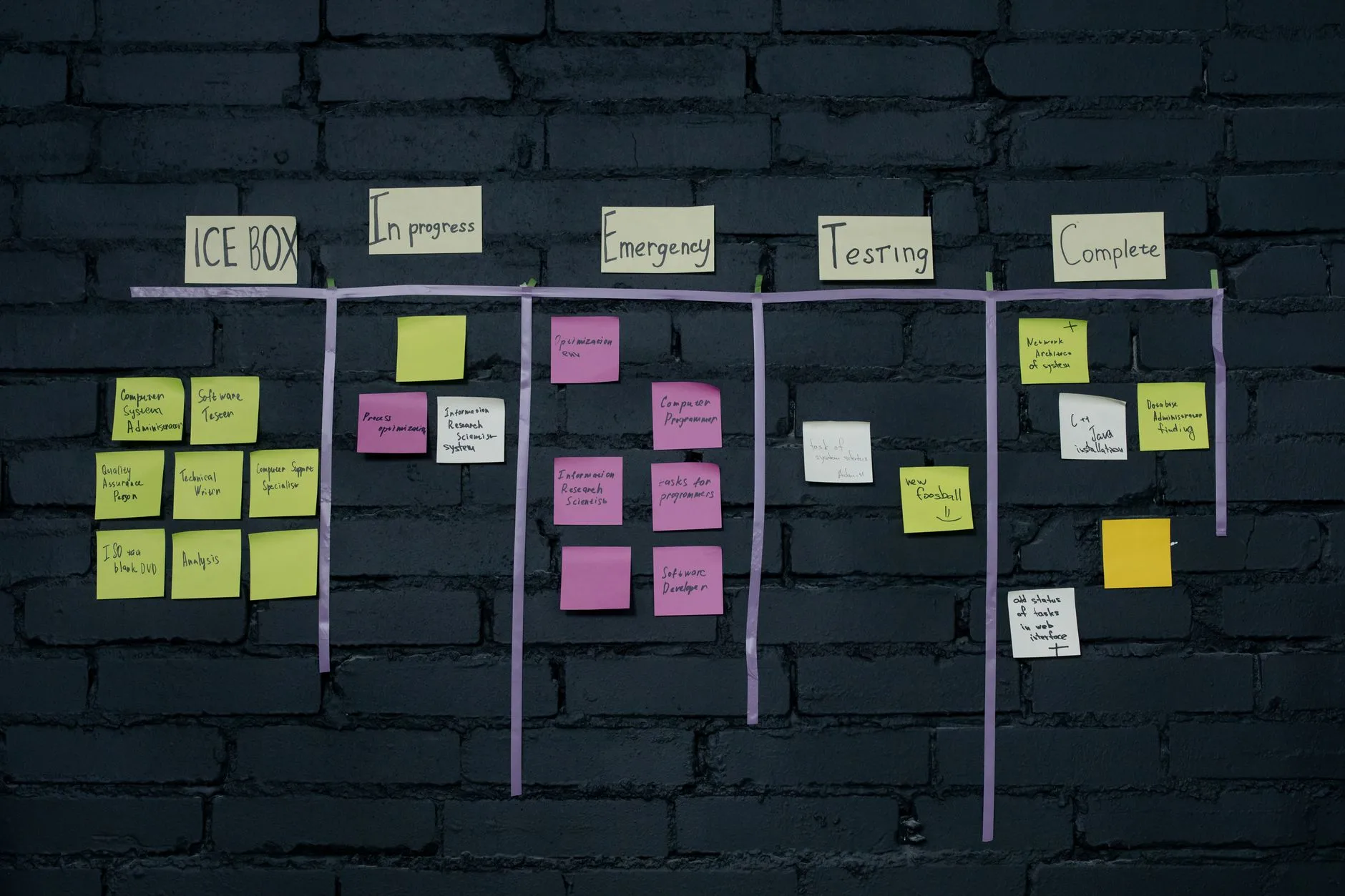
Moving from a high-level editorial calendar to a functional content engine requires transforming a static timeline into a dynamic, day-to-day execution framework. For business-to-business brands operating in complex markets, a basic schedule listing publication dates falls dangerously short of operational reality. The most useful content plan for B2B teams is not just a calendar; it is a production roadmap that sequences research, drafting, publishing, and distribution. Without a rigorously structured pipeline, even the most strategically sound content topics will stall, miss market windows, or fail to align with broader marketing campaigns and sales cycles.
To prevent bottlenecks and maintain accountability across cross-functional teams, organizations must assign clear ownership of the workflow to an editorial lead or content manager. A practical workflow can assign content planning to an editorial lead or content manager, with the plan serving as the source of truth for the team. This designated individual acts as the operational hub, managing handoffs between subject matter experts, external freelance writers, internal SEO specialists, and graphic designers. When every contributor looks to a single, centralized master document—whether hosted in an advanced project management platform like Asana and Monday.com or a specialized editorial tool like CoSchedule—confusion over asset versions, delayed feedback loops, and missed deadlines are systematically eliminated. The editorial lead maintains the integrity of this source of truth, updating status tags, monitoring word counts, and ensuring that no piece of content moves forward without satisfying preliminary quality benchmarks.
Operationalizing this roadmap requires establishing a standardized, step-by-step production pipeline tailored to the unique complexities of the B2B buyer’s journey. This lifecycle must be mapped out in sequential stages, beginning long before a writer opens a blank document and extending well after a post goes live. By breaking the content lifecycle down into distinct, sequential phases—such as keyword and audience research, outlining, drafting, technical review, stakeholder sign-off, publishing, and multi-channel distribution—teams can accurately forecast capacity and identify where delays typically occur. According to Content Marketing Institute’s 2023 B2B Content Marketing Benchmarks, Budgets, and Trends report, 51% of respondents cited workflow bottlenecks as a primary hindrance to content team efficiency, underscoring the critical need for a formalized, step-by-step sequencing model.
The pipeline must begin with a robust research phase where search intent is mapped against internal product expertise and customer pain points. During this initial stage, the content manager coordinates with SEO analysts to pull data from platforms such as Ahrefs or Semrush, ensuring that targeted search queries match the informational needs of enterprise buyers. Once the research is compiled into a detailed content brief containing target keywords, recommended word counts, internal link opportunities, and subject-matter expert interview questions, the project transitions into the drafting stage. Here, writers collaborate closely with internal engineers, product marketers, or C-suite executives to infuse the copy with proprietary insights, original data points, and authoritative industry perspectives.
Following drafting and internal copy-editing, the asset moves into the publishing and technical optimization stage. This involves uploading the content into the Content Management System, formatting headings for optimal readability, optimizing meta tags, and embedding relevant calls-to-action that support pipeline generation. However, creating and publishing the asset represents only the halfway point of the roadmap. A comprehensive production roadmap must heavily integrate a structured distribution phase. This final leg ensures that the newly published asset is systematically repurposed across channels—such as targeted LinkedIn newsletters, email nurture sequences managed through marketing automation tools like HubSpot, and community outreach channels. By treating distribution as an active, mandatory phase rather than an afterthought, B2B brands can maximize the organic reach and lead-generating potential of every piece they produce.
Leveraging Content Planning Tools and Software
Implementing a robust content strategy requires more than just a calendar and good intentions. For enterprise marketing teams navigating complex buyer journeys, the technology stack can either accelerate execution or create debilitating operational silos. For B2B content planning tools, the most valuable ones are those that help teams organize research, schedule work, and track production across the funnel. When a team can seamlessly transition from keyword research to whitepaper drafting and eventually to gated-asset distribution, operational friction drops significantly, allowing writers and strategists to focus on message clarity rather than administrative overhead. Historically, marketing departments built Frankenstein ecosystems: keyword research lived in SEO suites, editorial calendars lived in spreadsheets, task management happened in generic project trackers, and analytics sat in separate business intelligence dashboards. This fragmentation created version control issues, missed publishing deadlines, and an inability to accurately connect top-of-funnel content creation with closed-won revenue.
A current trend in 2026 is using content marketing software to manage the full workflow from topic research and planning through distribution and measurement, instead of using separate disconnected tools. Modern B2B content marketing software platforms consolidate these disparate steps into a single pane of glass. By adopting comprehensive suites, enterprise marketing organizations reduce the cognitive load of context-switching between tools. Editorial teams can view keyword metrics directly inside the same interface where they assign drafting deadlines, write copy, approve visual assets, and monitor multi-channel distribution. As highlighted in comprehensive industry evaluations such as the Best B2B Content Marketing Software | 2026 Rankings, the market has shifted decisively away from siloed applications toward unified ecosystems that incorporate artificial intelligence for predictive topic ideation, automated metadata optimization, and real-time ROI attribution modeling.
To maximize the utility of these advanced platforms, marketing operations leaders must categorize their toolset requirements across three primary operational pillars: research and ideation, production tracking, and distribution-to-measurement analytics. Each phase demands specific software capabilities to ensure the overall B2B workflow remains scalable.
Research and Ideation Modules
The foundational phase of content planning relies on deep audience insight and search behavior analysis. Modern planning software integrates native SEO research capabilities—pulling data on search volume, keyword difficulty, and semantic intent—directly into the ideation board. Rather than exporting CSV files from standalone SEO tools, content strategists can instantly validate topic viability against actual search demand and internal sales enablement queries. Teams can tag ideas by buyer persona, funnel stage (TOFU, MOFU, BOFU), and product line, ensuring a balanced content mix before a single word is written.
Production and Workflow Automation
Once a topic is approved, the software shifts from a brainstorming board to an execution engine. Effective B2B content production requires rigorous governance, including multi-tier reviews, legal compliance checks for regulated industries, and subject matter expert (SME) interviews. Comprehensive platforms streamline this through custom workflow templates and automated status changes. For instance, when a copywriter moves an article status from “Drafting” to “Technical Review,” the platform automatically assigns the task to the designated engineering or product marketing stakeholder, complete with a due date and specific checklist requirements. This level of transparency eliminates the classic bottleneck of misplaced drafts and unclear accountability.
Distribution and Closed-Loop Measurement
The final pillar bridges publishing with performance analysis. Integrated software suites manage the deployment of content across corporate blogs, social media channels, email newsletters, and paid syndication networks. More importantly, they connect these distribution channels directly to revenue analytics through CRM integrations. By tracking how a specific technical guide influences pipeline velocity or contributes to closed-won deals months down the line, marketing leaders gain precise visibility into content ROI. This capability transforms content planning from a creative guesswork exercise into a data-driven science, empowering teams to double down on high-performing content formats and deprecate underperforming topics with absolute confidence.
Measuring Success and Avoiding Common Workflow Pitfalls
Establishing a structured content planning workflow is only half the battle; maintaining its momentum and ensuring it genuinely contributes to enterprise revenue requires rigorous tracking and proactive problem-solving. One of the most frequent mistakes organizations make is planning and executing thousands of words of content without clear metrics, which makes it harder to judge whether the workflow is actually supporting business goals. When marketing teams operate in a vacuum—measuring success purely by output volume, such as publishing twelve blog posts per month rather than analyzing pipeline impact—they disconnect creative production from commercial reality. To secure long-term B2B growth, leaders must implement a comprehensive measurement framework that looks beyond vanity metrics and actively guards against operational dysfunction.
To break away from output-driven mindsets, B2B marketers must tie every phase of the workflow to quantifiable key performance indicators (KPIs) that reflect actual buyer behavior. Instead of solely tracking organic traffic or raw pageviews, mature marketing departments evaluate assisted conversions, marketing-qualified leads (MQLs) generated by specific content hubs, and overall pipeline velocity. For instance, according to an extensive 2024 content marketing benchmark study by the Content Marketing Institute (CMI), 83% of successful B2B organizations track content performance through lead generation metrics, whereas struggling teams overwhelmingly rely on basic web traffic stats. By anchoring your workflow analytics to revenue-centric milestones, you ensure that every brief written, keyword researched, and asset reviewed moves the needle on enterprise growth, aligning closely with principles outlined when discussing how SEO drives real business growth in 2026.
Beyond the danger of unmeasured output, teams frequently stumble into several other execution traps that quietly degrade workflow efficiency over time. Recognizing these recurring bottlenecks allows managers to course-correct before productivity grinds to a halt:
- The Silo Trap: Writers, SEO specialists, and sales enablement teams operate in isolation, resulting in content that ranks well for high-volume keywords but fails to address the nuanced objections of enterprise buyers during the consideration stage.
- The Bottleneck Trap: Over-complicating the editorial review chain with excessive stakeholder approvals, turning a standard 14-day production cycle into a multi-month ordeal that misses timely industry trends.
- The Strategy Drift Trap: Abandoning documented buyer personas and core content pillars in favor of chasing fleeting search trends, which dilutes topical authority and confuses prospective clients.
To combat these pitfalls, establish quarterly workflow audits as a non-negotiable operational standard. A workflow audit should examine your resource allocation, tool stack utilization, team feedback loops, and content decay rates. According to industry analysis data published by Ahrefs in their 2023 organic search study, over 65% of newly published B2B pages lose significant ranking potential within eighteen months if they are not systematically updated and re-optimized. Incorporating regular refresh cycles and performance reviews directly into your operational calendar ensures your content machinery remains lean, adaptable, and aligned with evolving search engine algorithms.
Ultimately, maintaining a high-performing B2B content workflow requires a culture of continuous refinement. By pairing clear, revenue-aligned metrics with disciplined quarterly audits, organizations can eliminate guesswork, protect their internal resources from burnout, and transform content planning from a chaotic guessing game into a predictable engine of sustainable enterprise growth.